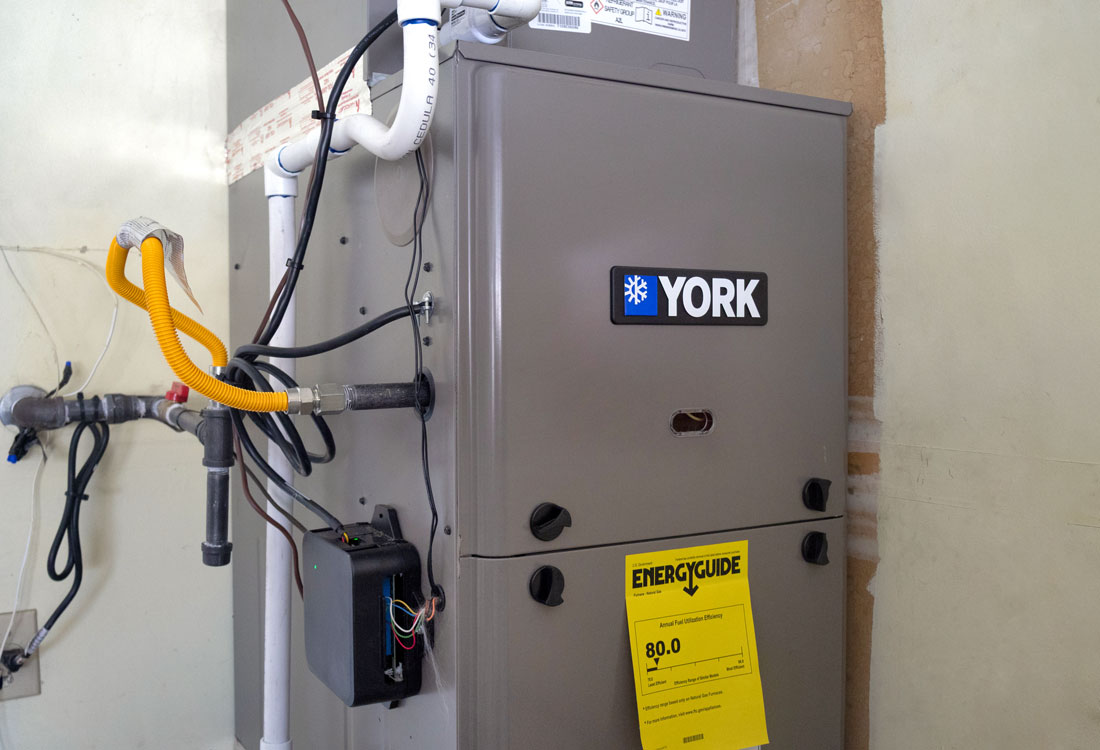
A furnace in the Central Valley runs far fewer hours than one in a cold-winter state, so the case for a yearly tune-up here is mostly about safety and reliability, not squeezing out energy savings. Heat pumps are different: they run all year and need attention before both seasons. Wally Falke’s Heating & Air Conditioning has maintained heating systems across Turlock, Modesto, Merced and the surrounding towns since 1969. Here’s what a proper tune-up covers, what it costs, and when to book.
What Should a Furnace Tune-Up Include?
A furnace tune-up from Wally Falke’s is a full inspection, cleaning and safety check of the burner, ignition, heat exchanger, venting, blower and controls, and every heating visit includes a carbon monoxide test and a gas-leak check. That lines up with ENERGY STAR’s maintenance checklist, which calls for checking gas connections, gas pressure, burner combustion and the heat exchanger on every heating check-up.
Here’s what our technicians do on a typical visit:
- Thermostat and controls. Confirm the thermostat reads accurately and that the system starts, runs and shuts off the way it should.
- Burner, ignition and flame. Clean and inspect the burner and igniter, and check for a steady blue flame.
- Heat exchanger and venting. Inspect the heat exchanger for cracks and the flue for blockages, then test for carbon monoxide. A cracked heat exchanger can leak CO, which makes this the most important few minutes of the visit.
- Gas connections and pressure. Check for leaks and confirm gas pressure is in range.
- Electrical. Tighten connections and measure voltage and current on the motors.
- Blower and airflow. Clean the blower, lubricate moving parts where needed, and verify airflow at the registers.
- Condensate drain. On high-efficiency furnaces, make sure the drain is clear so water can’t back up into the unit.
- Filter. Check it, change it if needed, and recommend a schedule for your home.
What Does a Heat Pump Tune-Up Include?
A heat pump tune-up covers everything a cooling tune-up does, because a heat pump is both your heater and your air conditioner, and because it runs in both seasons, it needs two tune-ups a year, spring and fall. Instead of the burner and gas checks, our technician cleans and inspects the condenser and evaporator coils, checks refrigerant levels and tests for leaks, tests and tightens the electrical connections and controls, inspects the blower, filter and airflow, and calibrates the thermostat. ENERGY STAR notes that airflow problems alone can cut a system’s efficiency by up to 15 percent.
Turlock Irrigation District customers can get some of that cost back. TID’s HVAC tune-up rebate pays up to $50, twice per account per year, for a tune-up by a licensed HVAC contractor that includes:
- Cleaning or replacing the air filter
- Cleaning the evaporator and condenser coils
- Verifying airflow
- Diagnosing refrigerant, with a recharge if needed
Those are AC and heat pump tasks, so a furnace-only tune-up won’t meet TID’s requirements, but a heat pump tune-up or an AC tune-up can. Apply within six months with the invoice. It’s limited to single-family homes, can’t exceed what you paid, and can’t be combined with TID’s replacement rebates; confirm funding at (209) 883-8432. MID doesn’t offer a tune-up rebate.
If you’re weighing a new heat pump rather than maintaining an old system, here’s what a heat pump costs here, including the TID and MID rebates.
How Much Does a Furnace Tune-Up Cost?
A furnace tune-up typically runs $70 to $200 nationally, according to Carrier’s homeowner guide, with plans and multi-system visits costing more. The most predictable way to pay for maintenance with Wally Falke’s is the VIP Maintenance Plan, which currently runs six maintenance visits for $545, about $90 a visit. That covers a heating tune-up in fall and a cooling tune-up in spring for three years, and the visits never expire if you miss one.
Plan members also get:
- No diagnostic charges, including weekends and overtime
- Priority scheduling within 48 hours
- Discounts on parts and labor
- A 5-year warranty on repairs done under the plan
A single visit makes the most sense if you just bought the home or you’re selling and want an inspection on record. If you’re staying, the plan usually costs less over time. For a one-time visit, call us for the current price and check our specials page for seasonal heating offers. Heat pump and AC owners in TID territory can take the $50 rebate above off each qualifying visit.
How Often Should You Service a Furnace?
Once a year, in early fall. ENERGY STAR recommends a heating check-up every fall and a cooling check-up every spring, partly because contractors get busy once the weather turns. Booking before the first cold snap also means any repair the technician finds can be handled before you need the heat.
If winter’s already here and it’s been more than a year, schedule anyway. A mid-season tune-up still catches safety problems and worn parts before they turn into a no-heat call.
New systems need maintenance too. Most manufacturers can deny a warranty claim on equipment that wasn’t professionally maintained, so keep the invoices from every tune-up.
Is a Furnace Tune-Up Worth It With Our Mild Winters?
For most Central Valley homes, yes, and the main reason is safety. A gas furnace that sits idle most of the year can develop problems you won’t notice until it’s running: a cracked heat exchanger, a loose gas connection, or a blocked flue. Those are the issues that can lead to carbon monoxide in the house, and they’re exactly what the yearly check is designed to find.
The energy savings from a furnace tune-up are smaller here than in a cold climate, simply because the furnace runs fewer hours. What you do get is fewer breakdowns on the first cold night of the season, a longer service life, and documentation that keeps your warranty intact.
Signs Your Furnace Needs Attention Now
Call for service rather than waiting for your next tune-up if you notice:
- Rooms that never get warm, or a system that runs and runs without reaching the setpoint
- Banging, booming on ignition, rattling, or a new squeal from the blower
- A burning or gas-like odor that lingers after the first few minutes
- The system turning on and off frequently
- A yellow or flickering burner flame instead of a steady blue one
- Heating bills well above last winter with no change in how you use the house
If you smell gas (a rotten-egg odor) or your carbon monoxide alarm sounds, don’t try to find the problem yourself. Shut the furnace off, get everyone outside to fresh air, and call us or your gas company right away. When repairs start becoming routine, here’s how to tell when a tune-up is no longer enough and a replacement is worth pricing.
What You Can Do Between Visits
A few habits keep your system healthier between professional tune-ups:
- Check your filter every month. ENERGY STAR recommends inspecting it monthly. Most homes change it every one to three months, and Valley dust and ag dust can push that toward the short end. Here’s which MERV rating to choose.
- Keep vents and returns clear of furniture, rugs and boxes.
- Keep three feet clear around the furnace, and don’t store paint, cleaners or anything flammable next to it.
- Test your carbon monoxide alarms and replace the batteries when you change the clocks.
Frequently Asked Questions
Why does my heater smell like burning when I first turn it on?
After months of sitting idle, dust settles on the heat exchanger and burners, and it burns off the first time the furnace runs. A faint dusty smell that fades within the first several minutes is normal. A burning smell that lingers, smells electrical, or comes back every time the heat runs is not, and Wally Falke’s recommends shutting the system off and calling for service.
Why is my furnace blowing cold air?
Start with the easy checks: make sure the thermostat is set to heat and the fan is set to “auto” rather than “on,” and look at the filter, because a badly clogged filter can make the furnace shut its burners off to protect itself. If those are fine, the most common culprits are a dirty flame sensor or a failing igniter. Wally Falke’s prices common furnace repairs like those at $150 to $600 on our heating repair page.
Book Your Heating Tune-Up
Wally Falke’s schedules heating and heat pump tune-ups across Turlock, Modesto, Merced and the surrounding towns, and every heating visit includes a carbon monoxide and gas-leak check. Call (209) 632-7596, schedule online, or ask about the VIP Maintenance Plan to cover both seasons.